Curly Hair Chart: A Simple Guide to Curl Types and Wig Textures
Understanding the physical geometry of natural curl patterns—from 2A waves to 4C coils—is the fundamental baseline for hair enterprise owners seeking to source authentic, high-converting commercial wig textures.
What Is a Curly Hair Chart?
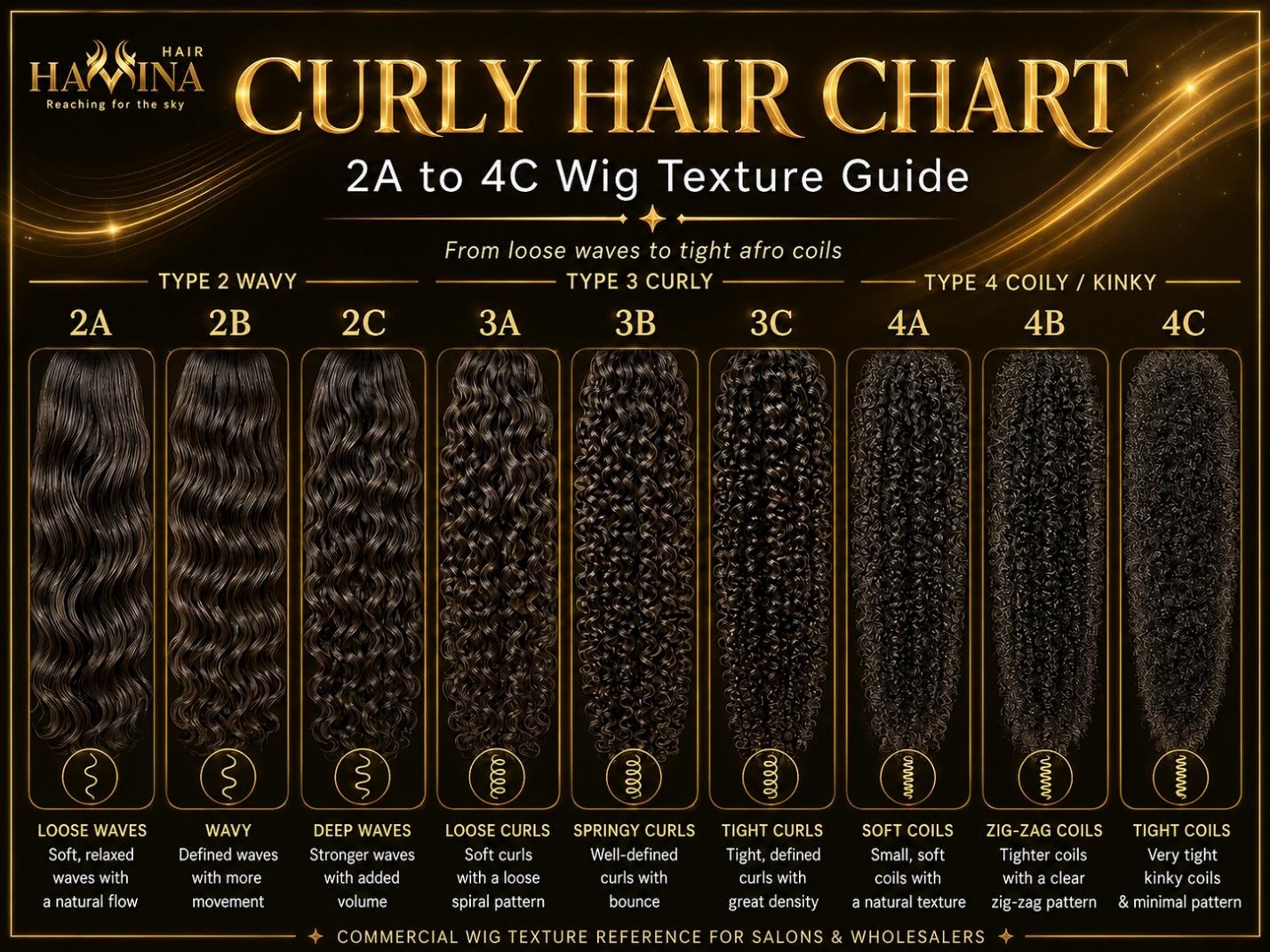
A curly hair chart is a standardized physical classification system that categorizes human hair strands based on the shape of their follicle structure, the tightness of their natural wave pattern, and their overall spatial volume. First popularized by Andre Walker and later expanded by trichologists globally, this framework separates human hair into four distinct structural categories: Type 1 (Straight), Type 2 (Wavy), Type 3 (Curly), and Type 4 (Coily and Kinky). Each numerical category is further subdivided into letter grades from A to C, reflecting the progressive decrease in curl diameter and the increase in structural shrinkage.
Understanding the mechanics of the curly hair chart allows B2B buyers, salon owners, and hair brand founders to bridge the technical gap between biological growth patterns and commercial wig manufacturing. While biological hair classification defines how hair emerges from the human scalp, the alternative hair industry adapts these patterns into engineered commercial textures such as Body Wave, Deep Curly, or Kinky Curly. Accurately translating natural types of curly hair into corresponding human hair curly wig units ensures that distributors can fulfill specific regional demands with precision.
For international distributors and luxury salon owners, referencing a curl pattern chart eliminates purchasing ambiguities when evaluating bulk inventory samples. It provides an objective baseline to communicate texture requirements with raw hair factories, ensuring that the delivered units meet the density, volume, and movement expectations of end-consumers.
Curly Hair Types From 2A to 4C
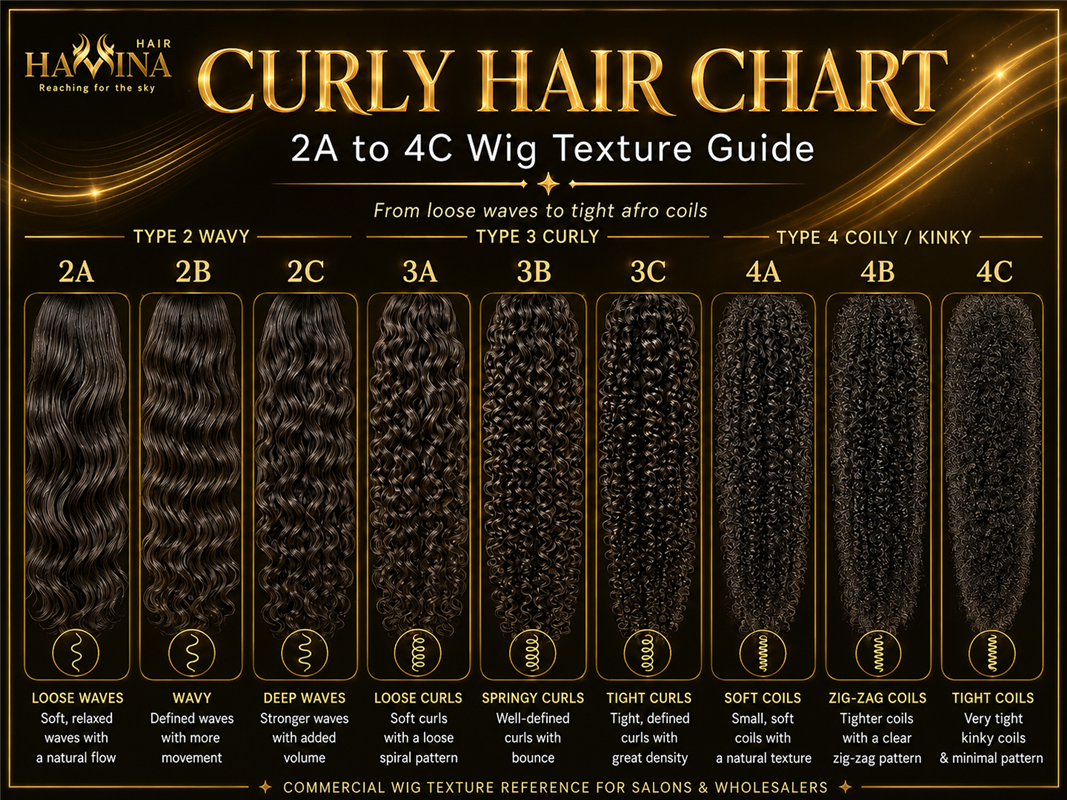
To streamline procurement decisions for salons and hair businesses, the table below maps natural biological hair types directly to their closest commercial curly wig texture equivalents, highlighting structural volume and pattern geometry.
|
|
|
|
|
|
|
|
|
|
|
|
|
|
|
Note: Commercial wig textures are engineered to mimic the visual aesthetic of biological hair types but represent manufactured classifications designed for durability, style retention, and commercial appeal.
Type 2: Wavy Hair Mechanics and Commercial Adaptations
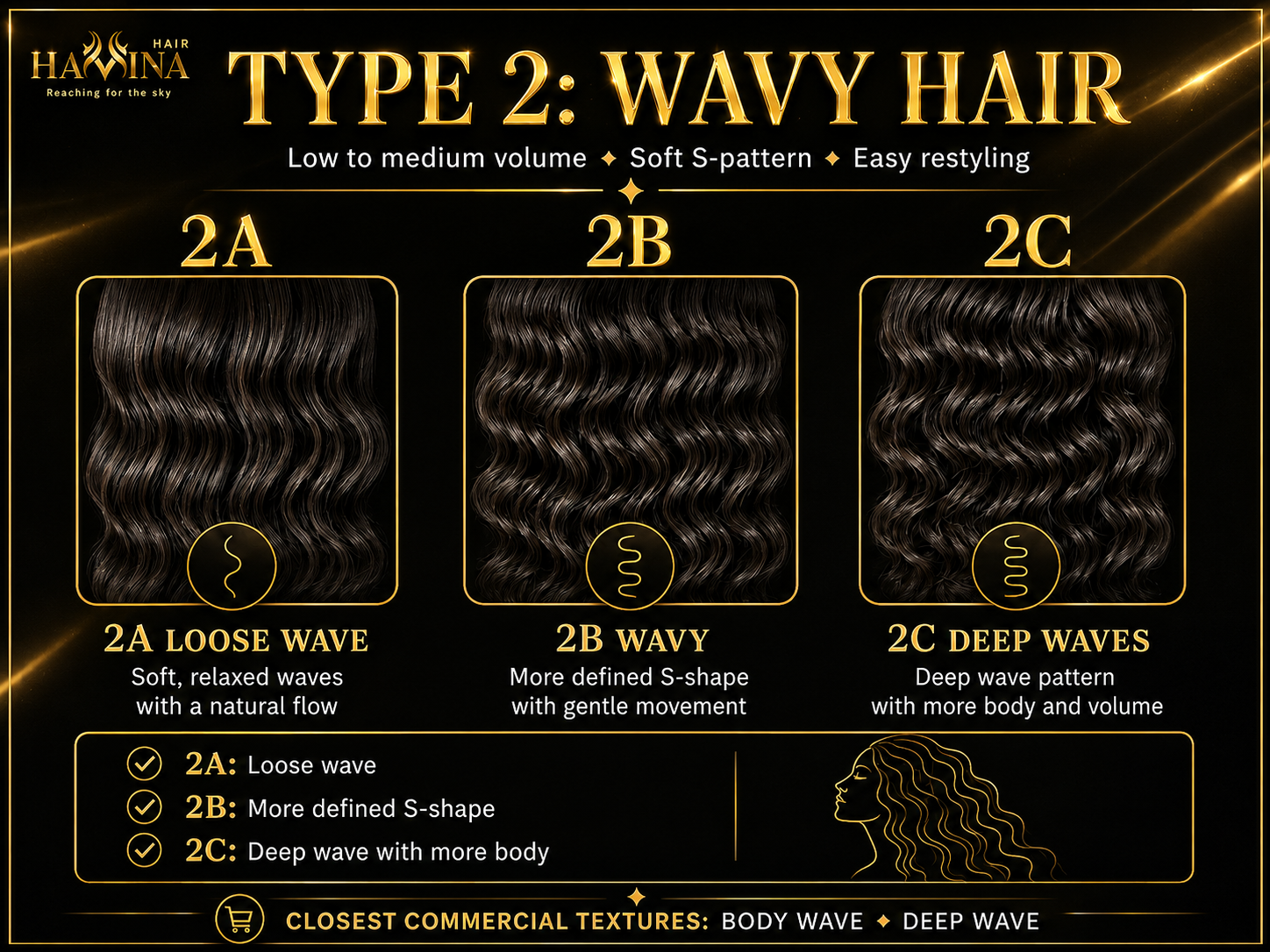
Type 2 wavy hair sits precisely at the midpoint between straight strands and defined curls, characterized by an open S-shaped wave pattern that lays relatively flat near the scalp. In raw hair manufacturing, Type 2 waves exhibit low to moderate spatial volume and require minimal mechanical manipulation during steam processing. This category is widely favored in the commercial market due to its low maintenance requirements and versatile restyling potential.
[2A Pattern: Subtle Open Wave] ──> [2B Pattern: Defined S-Curve] ──> [2C Pattern: Deep Waves with Root Lifts]
Type 2A hair displays a subtle, loose wave with fine strand density and minimal volume. In alternative hair manufacturing, 2A textures are closely aligned with Natural Wave bundles, offering an effortless, barely-there wave profile. Type 2B features a more pronounced, consistent S-shape starting midway down the shaft, serving as the biological reference point for classic Body Wave wigs that dominate daily fashion sales.
Type 2C hair exhibits deep, defined waves with noticeable root volume and occasional loose ringlets at the perimeter. This pattern correlates directly with commercial Deep Wave textures. For luxury wig brands, Type 2 textures represent high-turnover inventory because they offer end-users an elegant balance between sleek manageability and subtle natural volume.
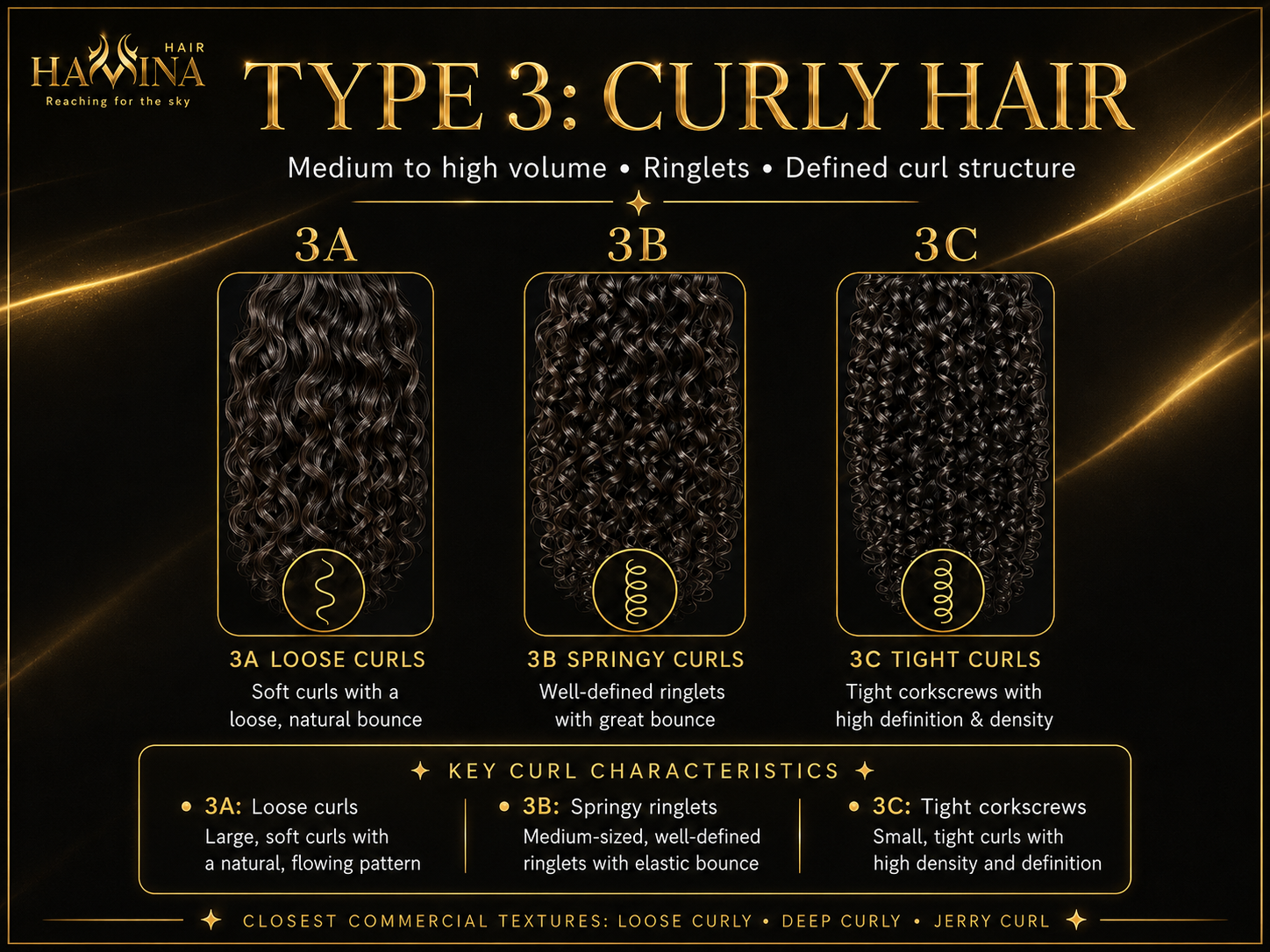
Type 3: Curly Hair Structures and High-Volume Systems
Type 3 hair is defined by genuine spiral ringlets, corkscrews, and looped curl structures that possess high natural bounce and spring-back elasticity. Unlike Type 2 waves, Type 3 textures feature raised cuticle layers at the turn of each ringlet, making them slightly more susceptible to ambient humidity and moisture loss. Manufacturing high-tier Type 3 wigs requires raw Vietnamese hair with intact cuticles to preserve structural elasticity after thermal processing.
[3A: Large Spiral Ringlets] ──> [3B: Springy Corkscrews] ──> [3C: Dense Pencil-Sized Coils]
Type 3A hair consists of large, loose spiral ringlets with a wide circumference and soft natural movement. This pattern serves as the foundation for commercial Loose Curly wig units. Type 3B hair features tighter, springy corkscrews about the diameter of a marker, mirroring the structural properties of Deep Curly commercial textures that are highly popular in wedding and event styling.
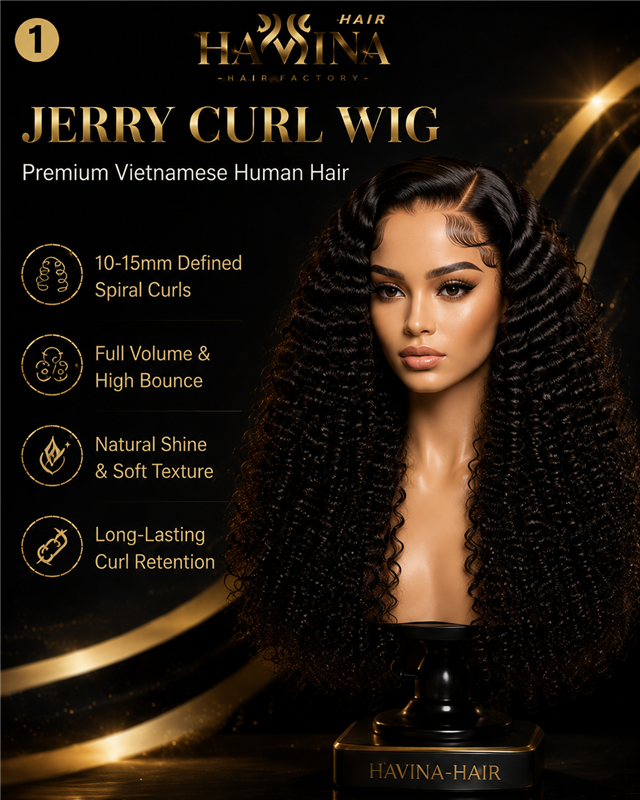
Type 3C hair presents dense, tightly packed pencil-sized curls with significant volume and root elevation. In commercial terminology, 3C hair closely aligns with Jerry Curl textures. Sourcing high-quality human hair curly wig units in Type 3 profiles allows salon owners to offer clients dramatic, voluminous styling without requiring daily chemical or mechanical perming.
Type 4: Coily and Kinky Hair Architecture
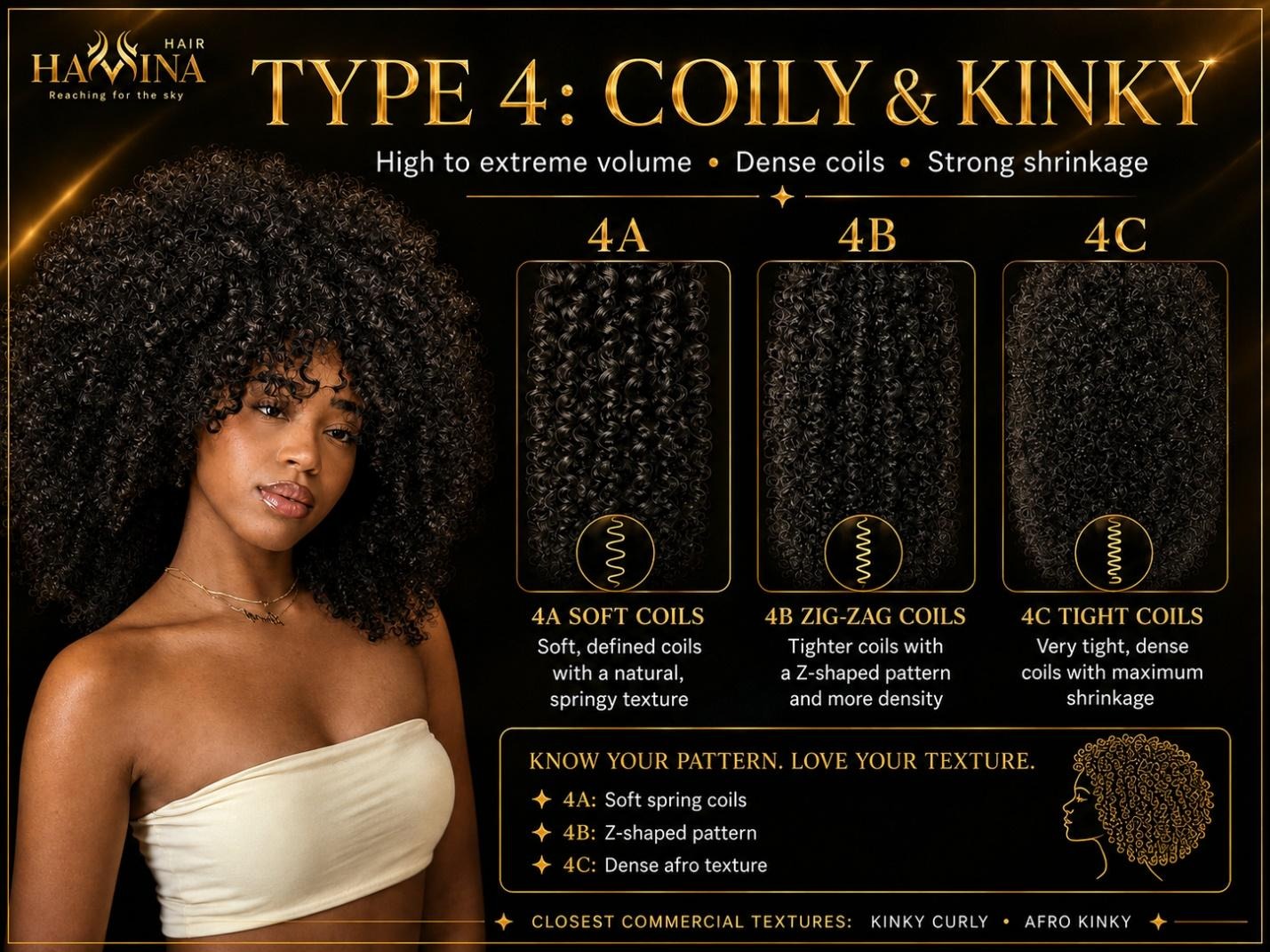
Type 4 hair represents the tightest curl geometries in the human pilary spectrum, characterized by miniature spiral coils, sharp Z-shaped zig-zag angles, and high structural density. Due to the sharp turns along the hair shaft, natural sebum struggles to travel from the follicle down to the ends, making Type 4 hair naturally drier and prone to significant moisture loss. When replicating this texture, premium factories use chemical-free steam styling to preserve cortex strength.
Type 4A features small, clearly defined S-shaped coils about the diameter of a crochet needle, correlating directly with commercial Kinky Curly wig offerings. Type 4B exhibits a sharp, crimped Z-pattern with less defined ringlets and high spatial volume, matching the visual characteristics of Afro Kinky textures favored by modern professionals seeking natural-looking protective styles.
Type 4C consists of densely packed, tightly interlocked coils that experience up to 70% visual shrinkage when dry. This intricate structure aligns with tight Afro Kinky textures. Offering authentic Type 4 curly wig texture choices allows alternative hair distributors to cater directly to the afro-textured consumer base, providing seamless blending with biological hairlines.
Natural Curl Types vs. Commercial Wig Textures
A common point of confusion for emerging hair business owners is equating biological hair classifications directly with commercial wig titles. A 2A to 4C hair chart describes biological human hair growth patterns emerging from a living scalp. Conversely, terms like Body Wave, Jerry Curl, and Kinky Curly represent proprietary or industry-standard commercial texture names assigned by hair processing factories.
While a 3C biological hair classification describes a specific coil diameter, a commercial 3C wig texture depends on additional manufacturing variables including raw hair origin, steam-setting pipe dimensions, strand density, and cuticle alignment. Commercial textures are engineered to provide pattern memory, ensuring that after washing and conditioning, the wig returns to its intended curl shape without structural matting.
Furthermore, biological hair on a single individual's head often contains a hybrid mixture of adjacent curl types, such as a combination of 3C and 4A patterns. Factory-manufactured wigs, however, offer uniform texture consistency across the entire cap architecture, ensuring predictable styling outcomes for salon installations and retail sales.
Strategic Selection: Choosing the Right Curly Wig for Your Target Market
For salon owners, wholesalers, and e-commerce brand managers, selecting the ideal commercial curly textures requires evaluating market demands, consumer maintenance habits, and desired styling volume. Aligning inventory selection with end-user lifestyles directly reduces product return rates and improves customer lifetime value.
[Low Volume / Easy Care] ──> Body Wave & Deep Wave ──> Best for Daily Office Wear
[Medium Volume / Moderate] ──> Loose Curly & Jerry Curl ──> Best for Glamour & Events
[High Volume / High Care] ──> Kinky & Afro Curly ──> Best for Natural Protective Installs
Portfolio Curation by Volume and Texture Density
Maintenance Thresholds and Client Education
Tighter curl patterns require greater post-installation care from the end-consumer. While Type 2 waves can be managed with basic wide-tooth combing and light serums, Type 3 and Type 4 curly wigs demand consistent hydration, leave-in conditioners, and gentle bottom-up detangling routines to prevent structural knotting along the lace base.
Educating clients on proper maintenance protocols protects the reputation of your hair brand. When end-users understand how to preserve the moisture balance of their human hair units, product lifespan increases significantly, leading to higher brand loyalty and consistent bulk repeat orders.
Frequently Asked Questions
1. What is a curly hair chart?
A curly hair chart is a standardized hair classification matrix that categorizes human hair from 2A to 4C based on wave shape, coil diameter, spatial volume, and natural strand shrinkage patterns.
2. What is the main difference between Type 2, Type 3, and Type 4 hair?
Type 2 hair consists of loose, open S-shaped waves with low volume. Type 3 hair features defined spiral ringlets and corkscrews with medium to high volume. Type 4 hair exhibits tight, dense miniature coils or Z-shaped zig-zag patterns with high spatial volume and shrinkage.
3. Can a person have multiple curl types on one head?
Yes. It is exceptionally common for biological hair to exhibit a blend of neighboring curl types, such as a mix of 3B and 3C patterns, depending on the section of the scalp.
4. Is Jerry Curl the same as 3C hair?
Jerry Curl is a commercial texture name created by hair factories, whereas 3C is a biological hair classification. However, commercial Jerry Curl wigs are specifically engineered to mimic the tight, pencil-sized ringlets of biological 3C hair.
5. What is the difference between Deep Curly and Kinky Curly?
Deep Curly textures feature defined, springy spiral ringlets typical of Type 3 hair. Kinky Curly textures incorporate tighter, miniature coils with a coarser visual texture, designed to replicate Type 4A natural hair.
6. Which curly wig texture is the easiest to maintain?
Looser patterns such as Body Wave and Loose Curly are the easiest to maintain because their open wave structure minimizes friction-induced tangling and requires basic daily conditioning.
Strategic Conclusion: Elevating Your Alternative Hair Brand with Precise Texture Sourcing
Mastering the technical nuances of the curly hair chart is a commercial requirement for alternative hair distributors, salon directors, and boutique brand owners aiming to establish market leadership. Understanding how biological 2A to 4C classifications map onto commercial wig textures enables business owners to curate balanced, high-converting product catalogs that address real consumer demands across diverse regional demographics.
Partnering with an established manufacturing source like Havina Hair ensures that your commercial wave and curl patterns are produced using 100% raw human hair with intact cuticles. Factory-direct precision guarantees that whether you order loose Body Wave units or dense Kinky Curly wigs, the texture integrity, pattern memory, and structural density remain consistent across every wholesale batch.
For international distribution networks, luxury salon chains, and private-label hair brands seeking to review our complete texture portfolio or request live factory texture video demonstrations, professional consultations can be established directly through our corporate distribution network.