For high-end salon owners and global distributors, understanding the origin of raw hair is not merely a product detail—it is a non-negotiable competency required to maintain quality consistency and client trust. Because raw hair behaves according to its biological starting point, the sourcing region dictates how the hair will respond to chemical processing, heat styling, and daily wear over a multi-year lifecycle. Procurement decisions made without a granular understanding of origin often lead to mismatched service offerings and compromised reputations.
The two primary powerhouses in the premium raw market are Cambodia and Vietnam. Cambodian hair is sourced from donors in rural communities, characterized by its natural, unprocessed state and robust texture. In contrast, Vietnamese hair is collected from donors in the country's highland regions, where traditional hair-care practices involving natural herbs and oils produce some of the healthiest, most resilient cuticle layers available globally.
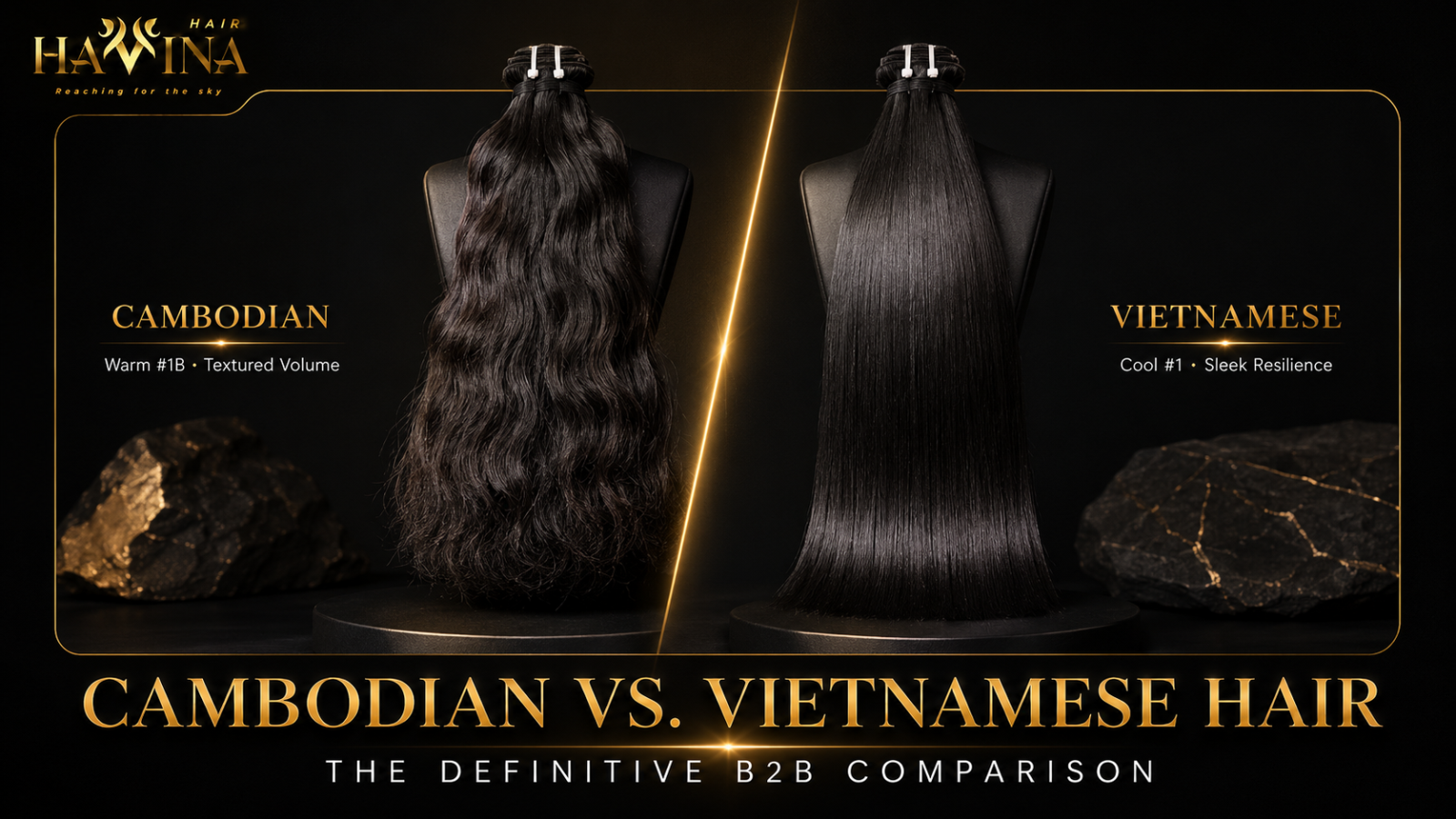
The most immediate differentiator for the professional buyer lies in the raw aesthetic:
These raw traits form the foundation of the product’s lifecycle. From the coarseness of the strand to the "bleaching ceiling," the origin determines which services a salon can successfully offer and the long-term viability of the extensions as a luxury asset.
The physical properties of the hair strand—specifically cuticle thickness and texture—directly impact a salon’s service menu and retail ROI. Utilizing the wrong origin for a specific application can lead to premature shedding, poor curl retention, or catastrophic damage during chemical lifting. For the B2B buyer, Vietnamese hair also offers a unique logistical advantage: it is sorted by draw type (Single, Double, and Super Double drawn), allowing for precise inventory management based on volume requirements.
|
|
|
|
|
|
|
|
|
|
|
|
|
|
|
|
|
|
|
|
|
|
|
|
|
|
|
|
|
|
|
|
|
|
|
|
|
|
|
|
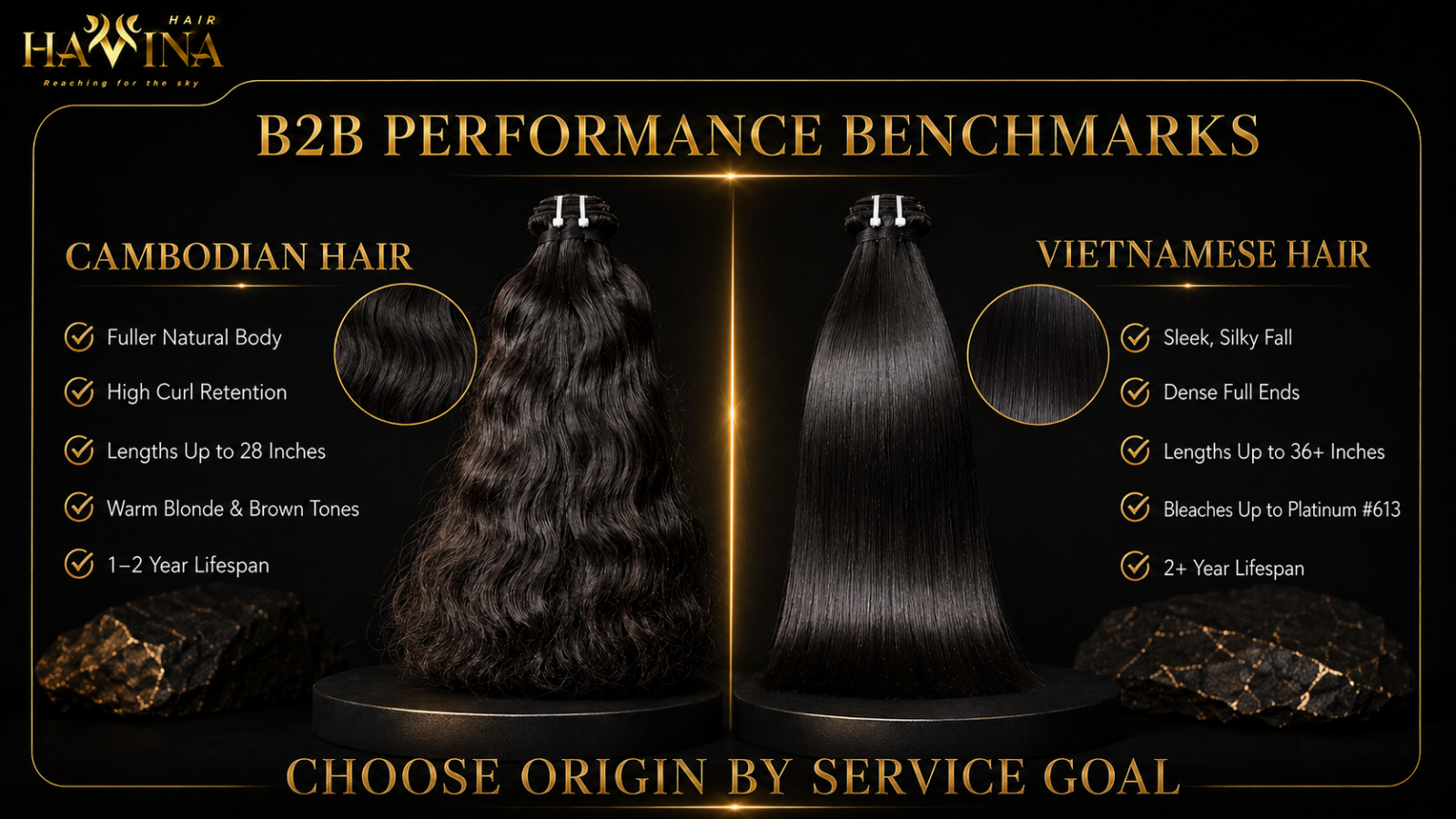
B2B Performance Benchmarks: Cambodian vs. Vietnamese HairThe Bleaching Ceiling & Technical Versatility
A critical technical distinction for professional colorists is the "Bleaching Ceiling." Due to the exceptional thickness and health of the Vietnamese cuticle, these strands can withstand the aggressive oxidation required to reach platinum #613 while maintaining structural integrity. Conversely, Cambodian hair is best suited for transformations into warm blondes or rich browns; pushing Cambodian hair toward platinum levels risks significantly weakening the strand.
While these metrics define performance, professionals must also employ rigorous verification protocols to ensure inventory matches these technical claims.
In a global market where "machine-perfect" processed hair is frequently misrepresented as raw inventory, quality control teams must utilize Practical Differentiation Protocols. These tests allow a buyer to verify raw traits that industrial processing cannot accurately replicate.
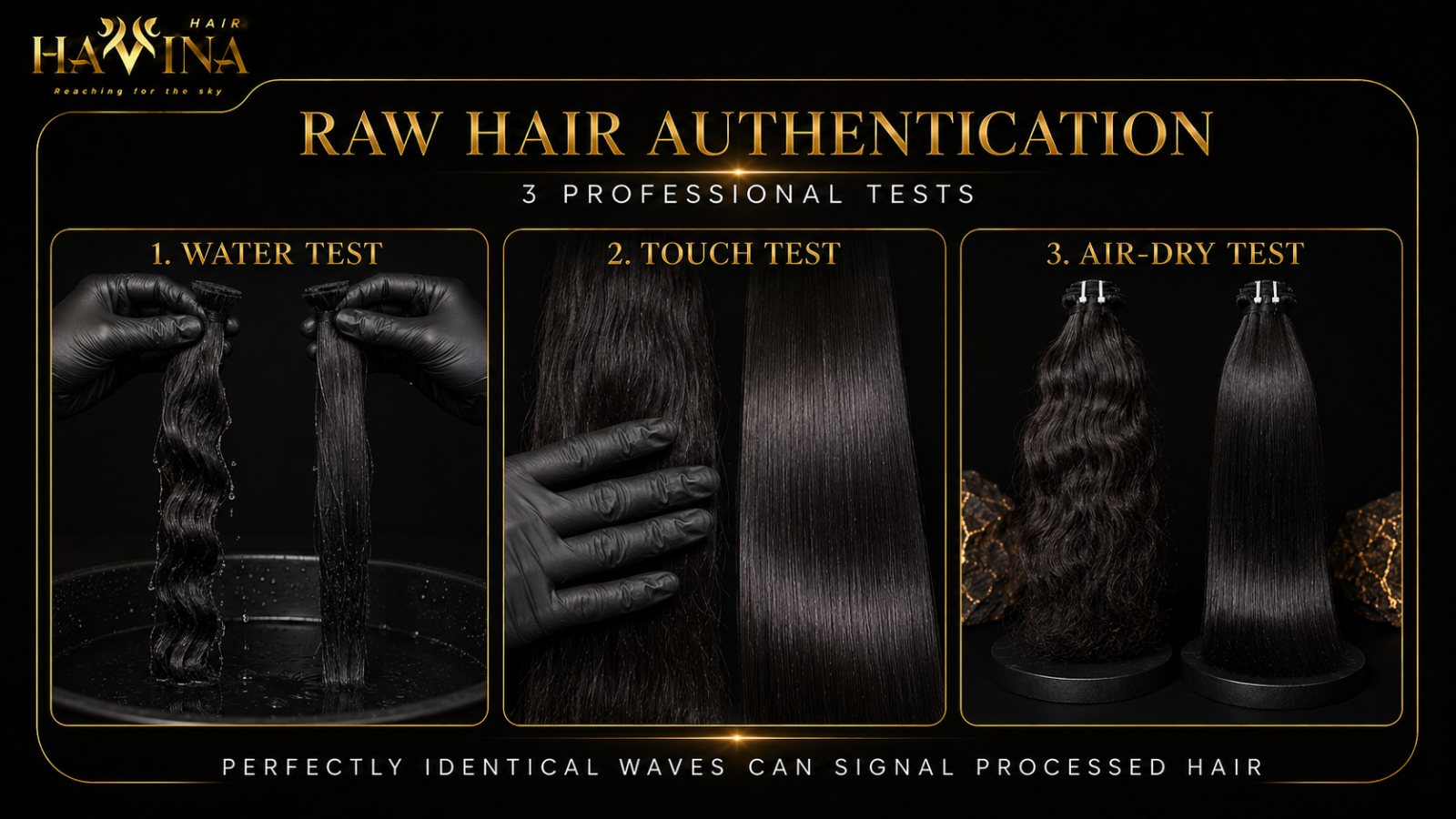
Standard Operating Procedure (SOP) for Authentication
1. The Water Test
2. The Touch Test
3. The Air-Dry Test
Consultant’s Warning: Treat machine-perfect uniformity as a red flag. Truly raw hair varies slightly from strand to strand. If a "wavy" bundle features identical, perfectly repeating curls, it is likely acid-processed or steam-styled hair being sold as raw inventory.
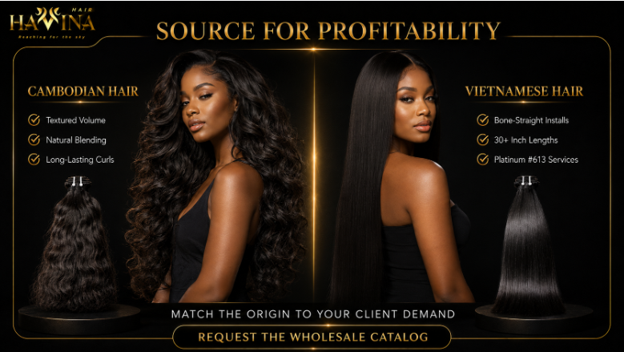
4. Strategic Business Alignment: Sourcing for Profitability
Effective sourcing requires aligning hair origin with target demographics, service types, and profit margins. The choice between these two origins is a strategic calculation based on your specific business model.
Business Use-Case Recommendations
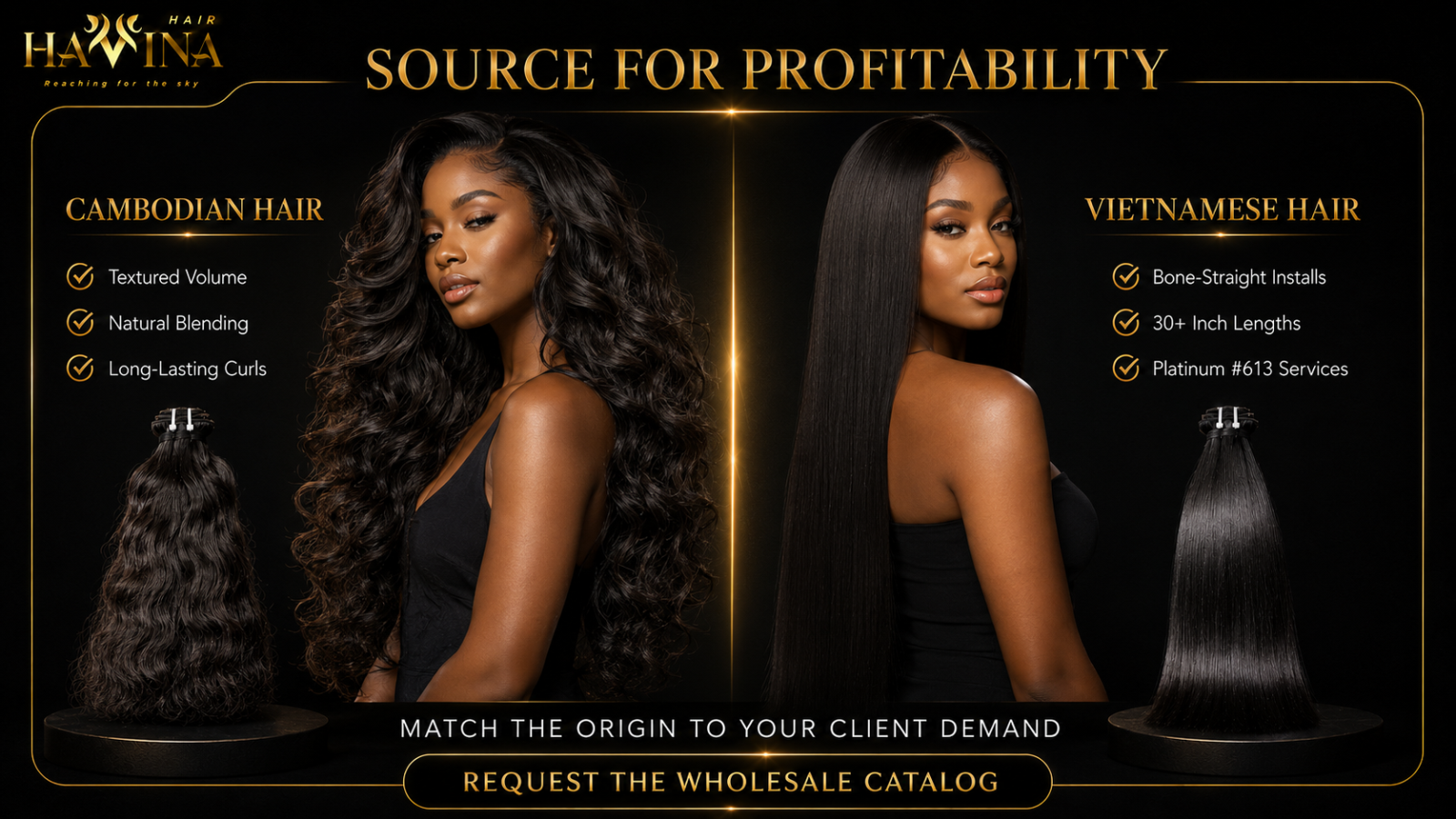
Pre-Scale Checklist for B2B Buyers
Before committing to bulk procurement, ensure the following requirements are met to mitigate supply chain risk:
Strategic Conclusion Both Cambodian and Vietnamese origins represent the pinnacle of premium raw quality. However, the selection is a strategic one: Cambodian hair offers a scarce, high-volume texture for niche luxury needs, while Vietnamese hair provides the sleekness, length, and bleaching versatility required for high-margin, scalable salon operations. Success in the B2B hair market depends on matching the unique biological traits of the source to the specific demands of your clientele.
DM us: +84 967 080 229